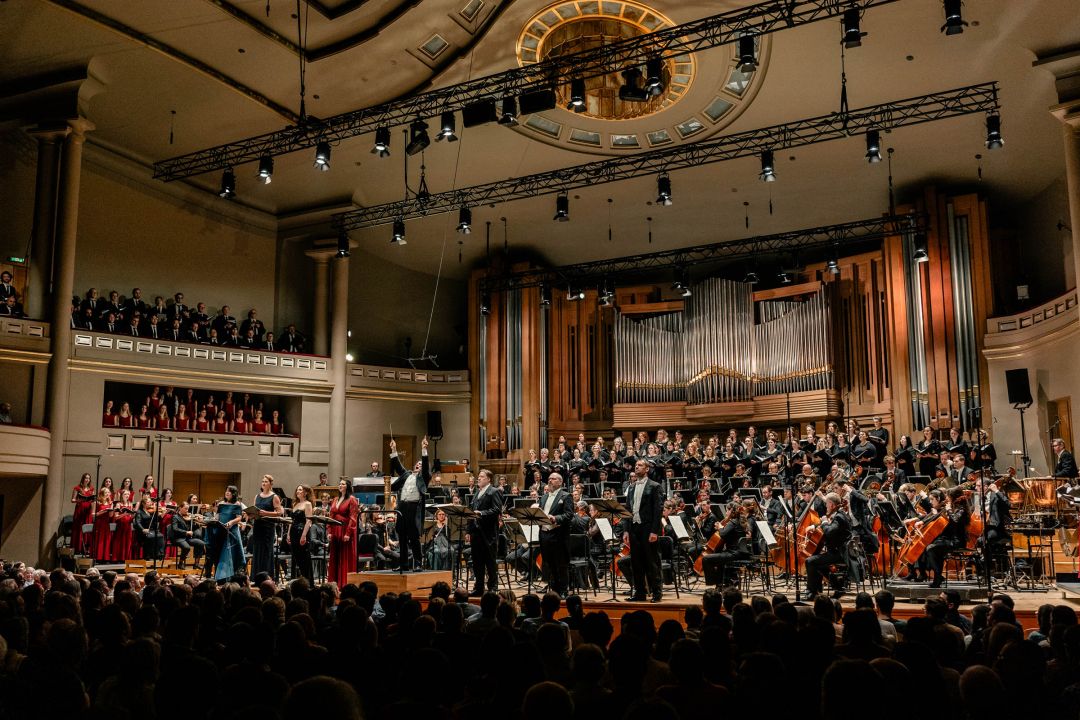
BOZAR, 8 and 9 March 2025
The Symphony No. 8 in E-flat major by Gustav Mahler is one of the largest-scale choral works in the classical concert repertoire. Because it requires massive instrumental and vocal forces, it is often called the ‘Symphony of a Thousand.’ Due to its difficulty and high cost of performance, it is rarely programmed, making it a rare piece to encounter — especially for a young singer.
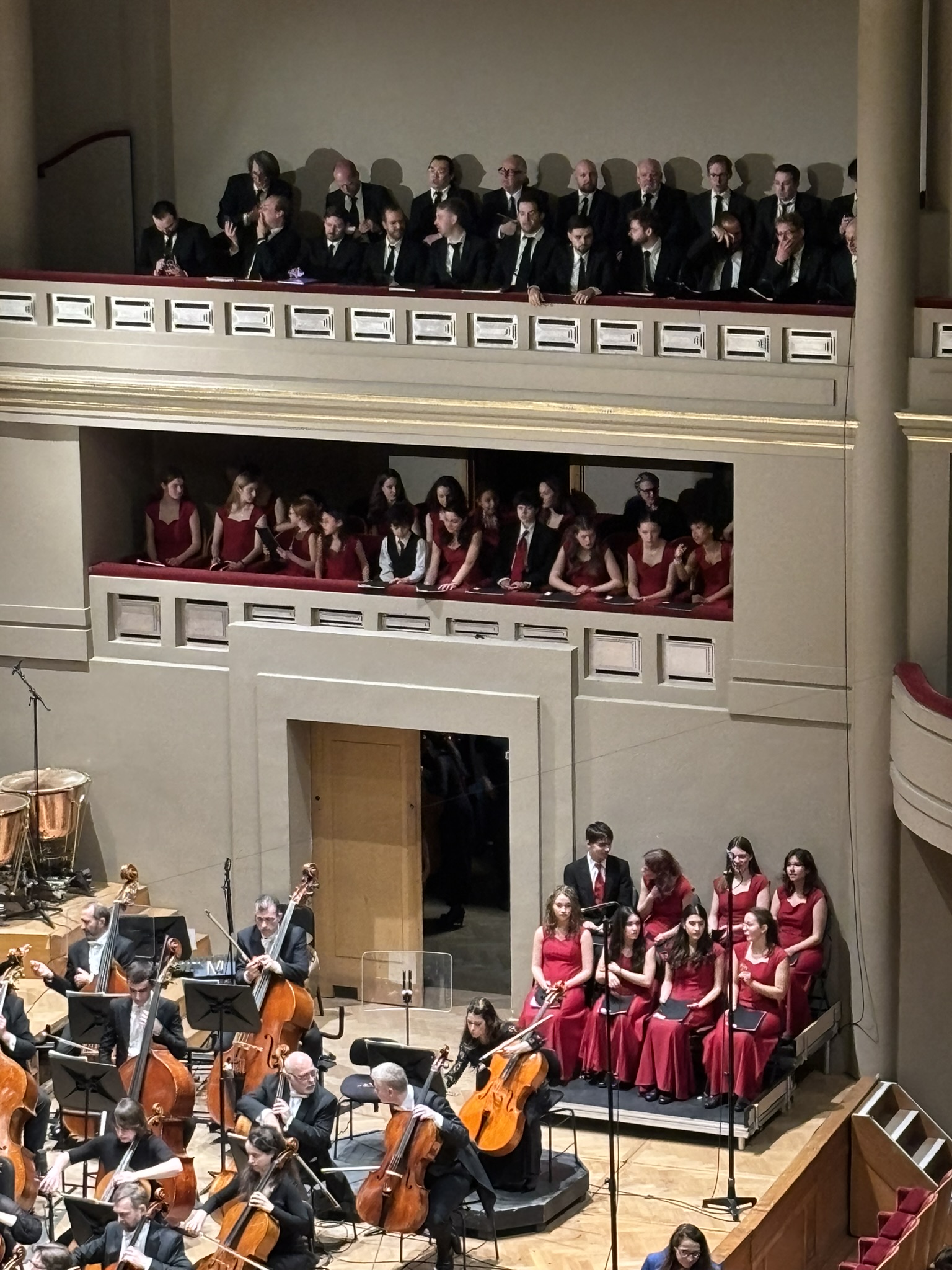
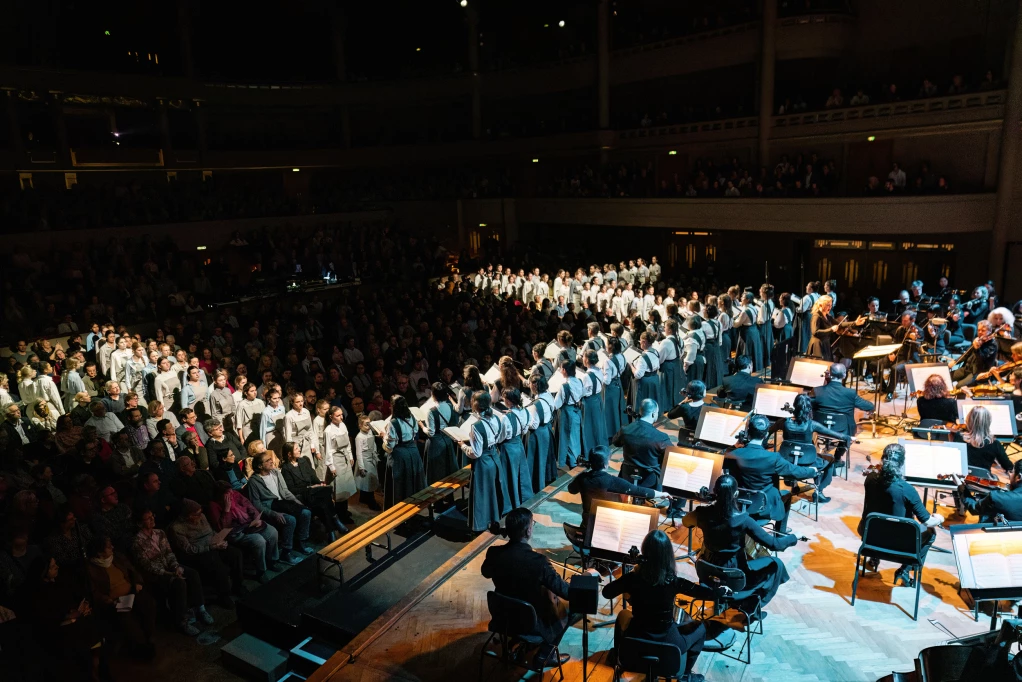
For these two concerts, organised by La Monnaie and conducted by Alain Altiniglou, we were nearly three hundred singers and musicians on stage at the main hall of the Palais de Beaux-Arts in Brussels. We filled all the stage, plus six balconies full of singers and some trumpets at the back of the audience. Both concerts were sold out, so we sang for more than 2000 people every night.
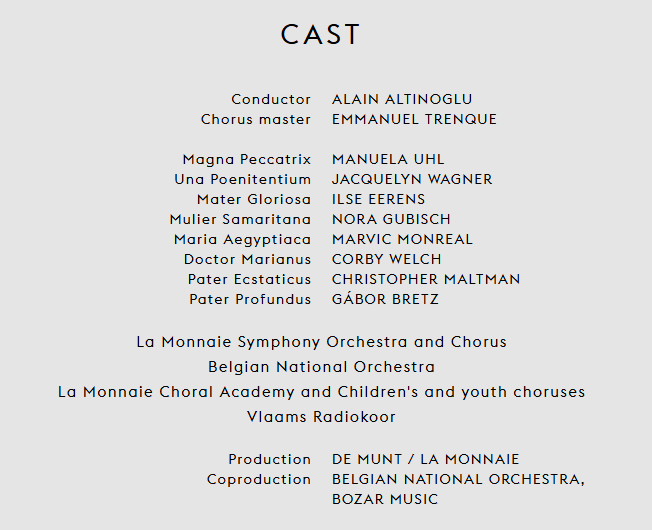
I have sung with an orchestra before, but this was two orchestras combined (La Monnaie Symphony Orchestra with the Belgian National Orchestra) as well as two adult choirs combined (La Monnaie Choral Academy and the Flemish Radio Choir), plus one children’s choir (the Children’s and Youth Choirs of La Monnaie), and eight soloists, all of which created an incredibly loud sound, for a non-amplified concert, and an almost overwhelming atmosphere.
All in all, an impressive experience.
Mahler, as well as a renowned composer, was a very successful conductor of his time. He composed his works almost exclusively during his holidays, after the concert season was over. This symphony was composed in a single inspired burst at Mahler’s villa in southern Austria in the summer of 1906. The last of Mahler’s works that premiered in his lifetime, the symphony was a critical and popular success when he conducted the Munich Philharmonic in its first performance, in Munich, on 12 September 1910.
The Eighth Symphony’s two parts combine the sacred text of the 9th-century Latin hymn Veni creator spiritus with the text from the closing passages from Goethe’s 19th-century dramatic poem Faust.
As part of the youth choir we intervened in both parts, including the impressive finale, but we only sang in sections where every instrument and every singer were singing together. Singing these passages was nice, however my favourite parts were those where the finest art of Mahler’s composition got to shine in moments with lower intensity. Especially where the soloists and adult choirs were singing pianissimo and the music was very beautiful.
This production took multiple months of preparation and a week of intensive rehearsals, so I had to miss some school. We were given a standing ovation for both performances – the audience was very enthusiastic – so it was worth the effort!
What the critics said
Most critics hailed the performance as a triumph, praising the quality of the orchestra and choirs as well as Altinoglu’s fine conducting. The La Monnaie Symphony Orchestra and the choirs (prepared by Emmanuel Trenque and Benoît Giaux) were praised for our high technical and artistic level. Some critics highlighted the performance’s ability to create an immersive atmosphere, particularly in the first movement, “Veni Creator Spiritus.”
Other reviewers expressed reservations, particularly regarding the clarity of the sound and the integration of the soloists. Some found that the sheer mass of sound—especially in the densest passages—was difficult to distinguish. I tend to agree with this opinion, as far as I can judge from my seat at the choir, but none the less, thoroughly enjoyed the quality of Mahler’s music. One critic mentioned that the placement of the singers and musicians, especially the arrangement of the choirs, made achieving a proper sound balance challenging.
Some reviewers expressed a preference for recorded versions of the symphony, noting that the Eighth is a complex work that can provoke widely varying reactions. However, in Mahler’s time there were no recordings, and the documented live performances of the time casted even more musicians, probably under even noisier acoustic conditions. We must have been closer to the original experience than to modern, clean recordings. So, as some of these reviewers admit, whether you love it or hate it has more to do with Mahler himself and his concept than with this particular version. I personally loved it.
- Bachtrack: Alain Altinoglu dirige une subtile Huitième Symphonie de Mahler à Bozar
- ResMusica: A Bozar, Alain Altinoglu en état de grâce dans une frémissante 8e Symphonie de Mahler
- Parterre Box: Beyond redemption
- Olyrics: Ôde à la création à Bruxelles, La Symphonie des Mille
- KC Classical Central: Opportunity in Bozar: Gustav Mahler no. 8
- ForumOpera: Mille gloires

Leave a Reply