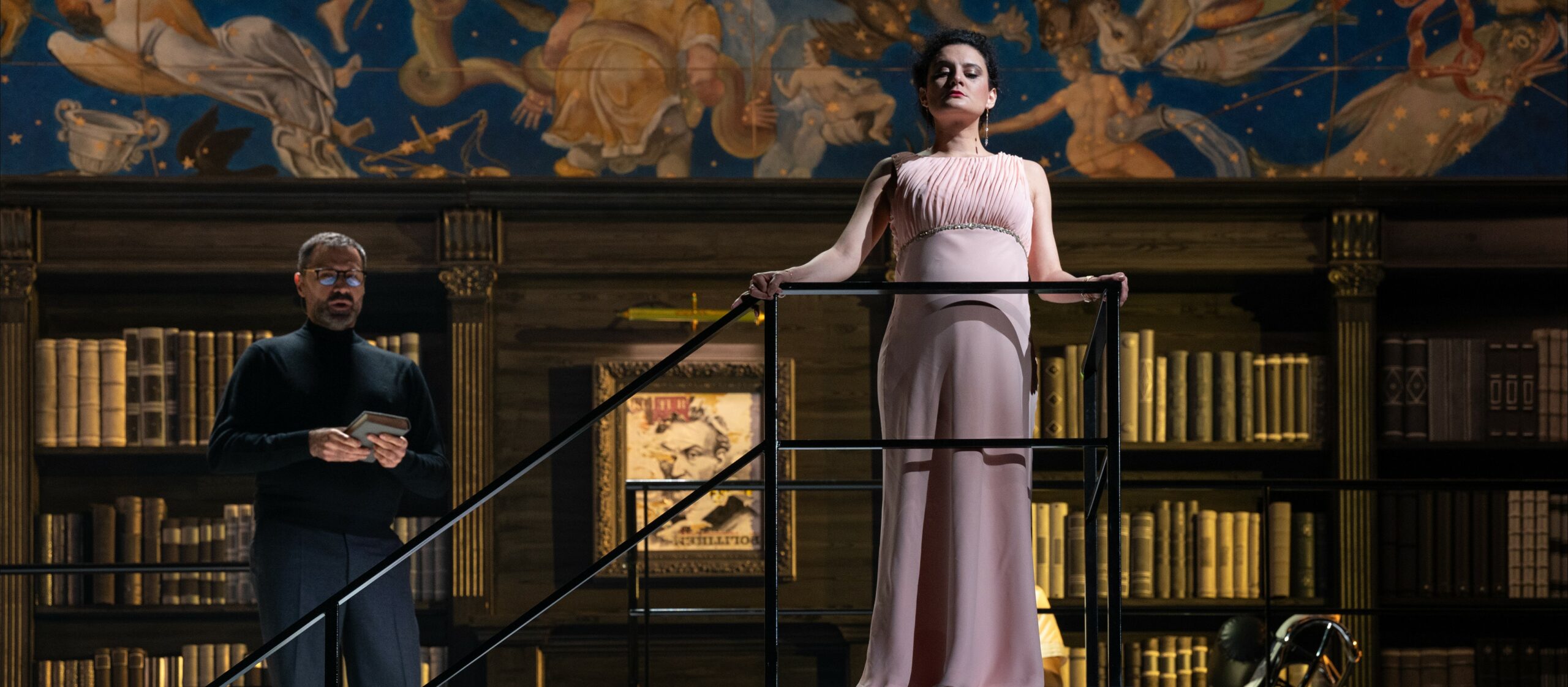
Miro (Part I) – 26 April 2025
Godo (Part II) – 27 April 2025
"Pur ti miro, pur ti godo,
Pur ti stringo, pur t'annodo,
Più non peno, più non moro,
O mia vita, o mi tesoro."
Claudio Monteverdi, L’Incoronazione di Poppea
"I look at you, I long for you
I embrace you, I bind myself to you,
I no longer suffer, I no longer die,
Oh my life, Oh my treasure."
On paper, the concept is intriguing: merge scenes and music from these three very different operas and some madrigals into a new, coherent whole. In reality? Coherence was the last thing this production delivered.
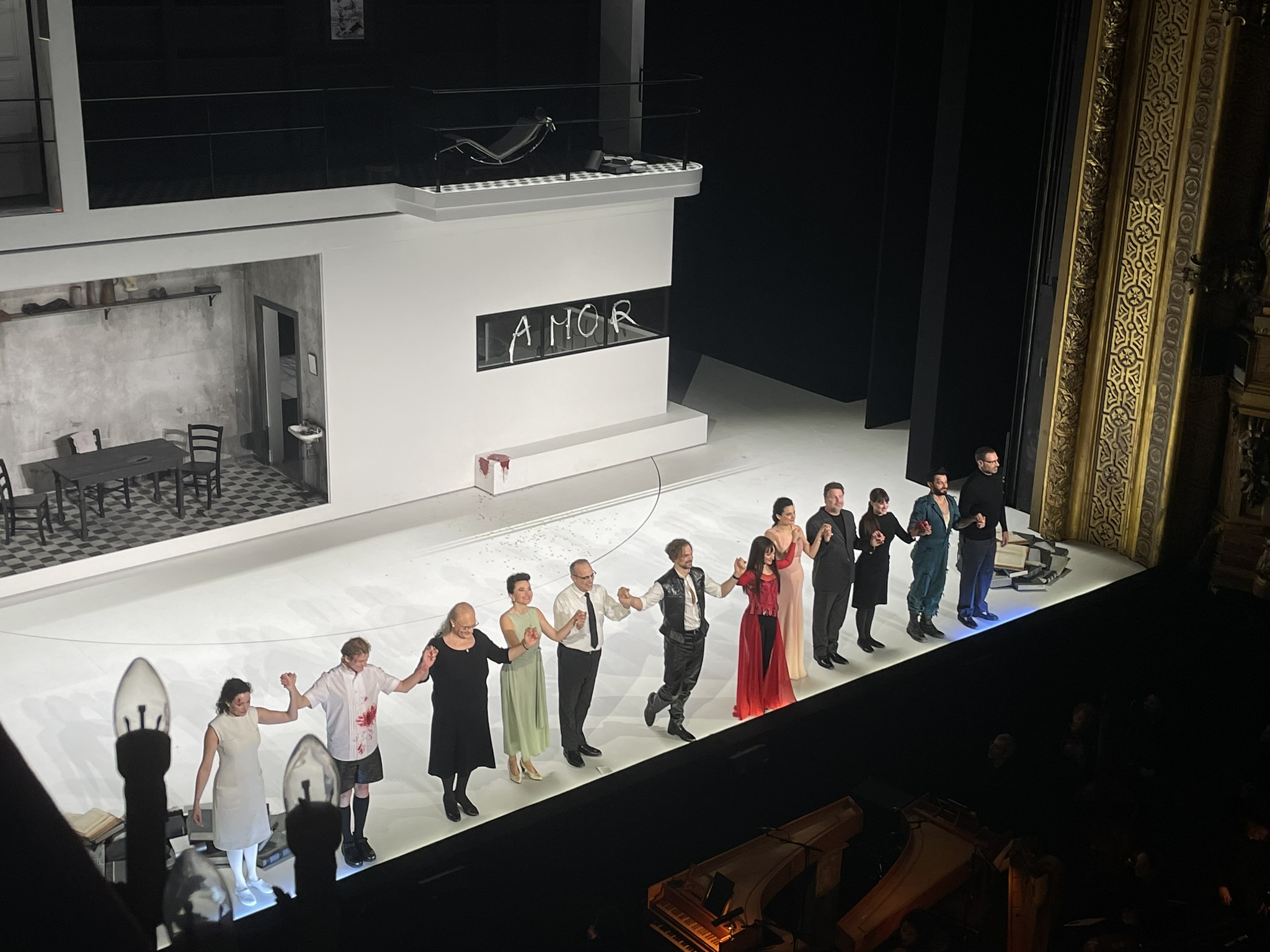
Let’s start with the good: the twelve (!) soloist singers were equally strong across the board. The male soprano, Federico Fiorio, was particularly impressive, pulling off a demanding part with ease and clarity, I also enjoyed his characterisation. The bass, Jérôme Varnier, was also extremely good, both vocally and as an actor, and one of the sopranos, Giulia Semenzato, gave a standout performance as well. The countertenor Xavier Sabata defended a difficult female role with brio. Vocally, the production was on very solid ground.
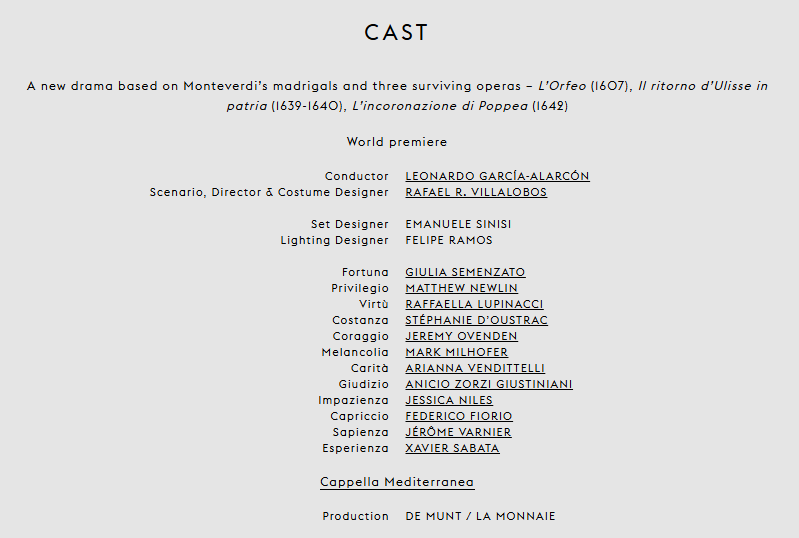
The music was sublime, a compendium of Monteverdi’s arias, duos, and madrigals among the best music from the Renaissance. Monteverdi is considered the father of opera, and his L’Orfeo (1607), the first opera ever composed.
The orchestra was the delighful Cappella Mediterranea, a baroque music ensemble created and directed by the Argenitinian conductor Leonardo García-Alarcón, who conducted and played the harpsichord. It is very rare to hear a true baroque orchestra, specialised in ancient music and playing with period instruments, in a big opera theatre. In this case, the style, volume and acoustics were perfect.
“Monteverdi is the greatest revolutionary in opera history”
Leonardo García-Alarcón
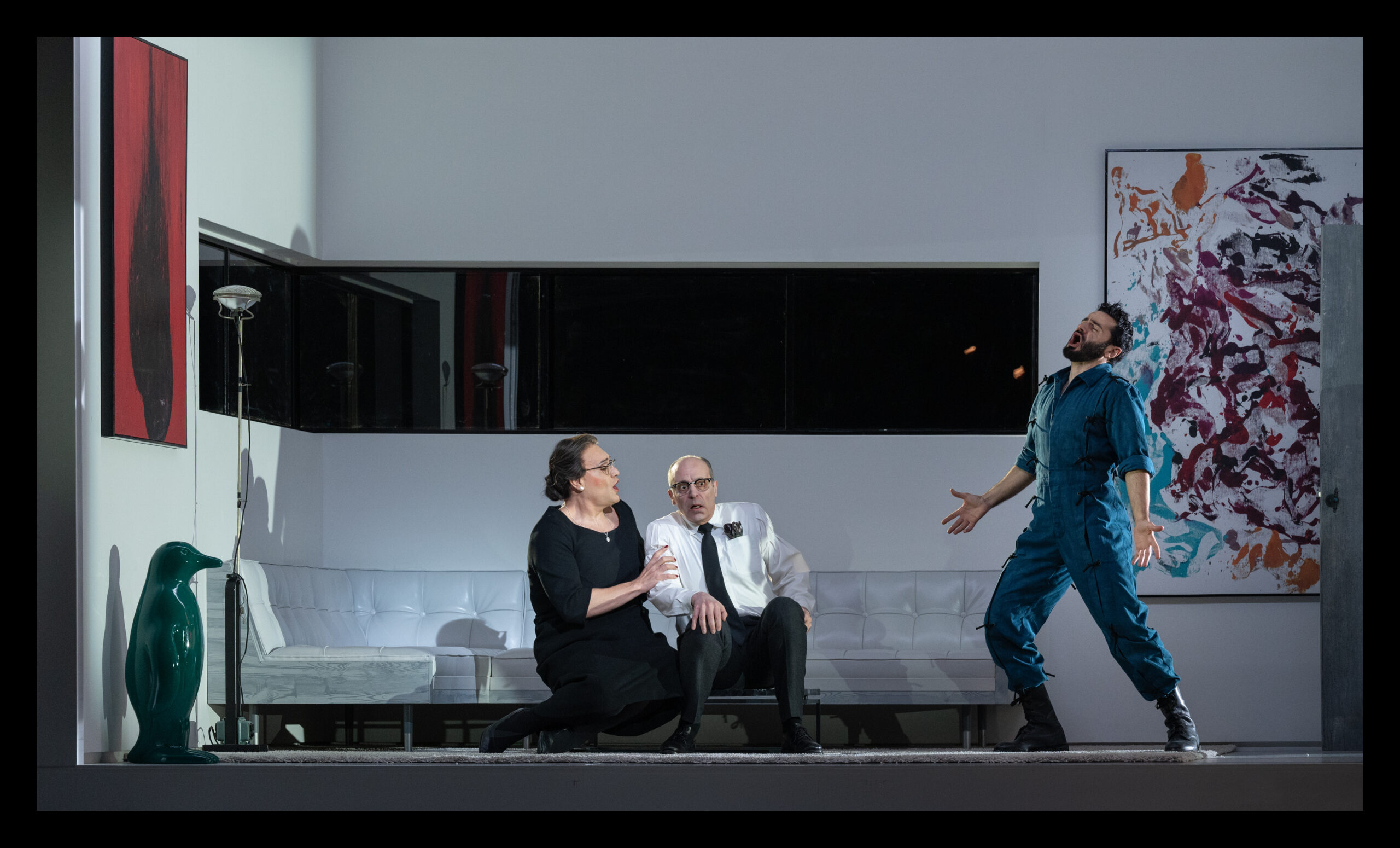
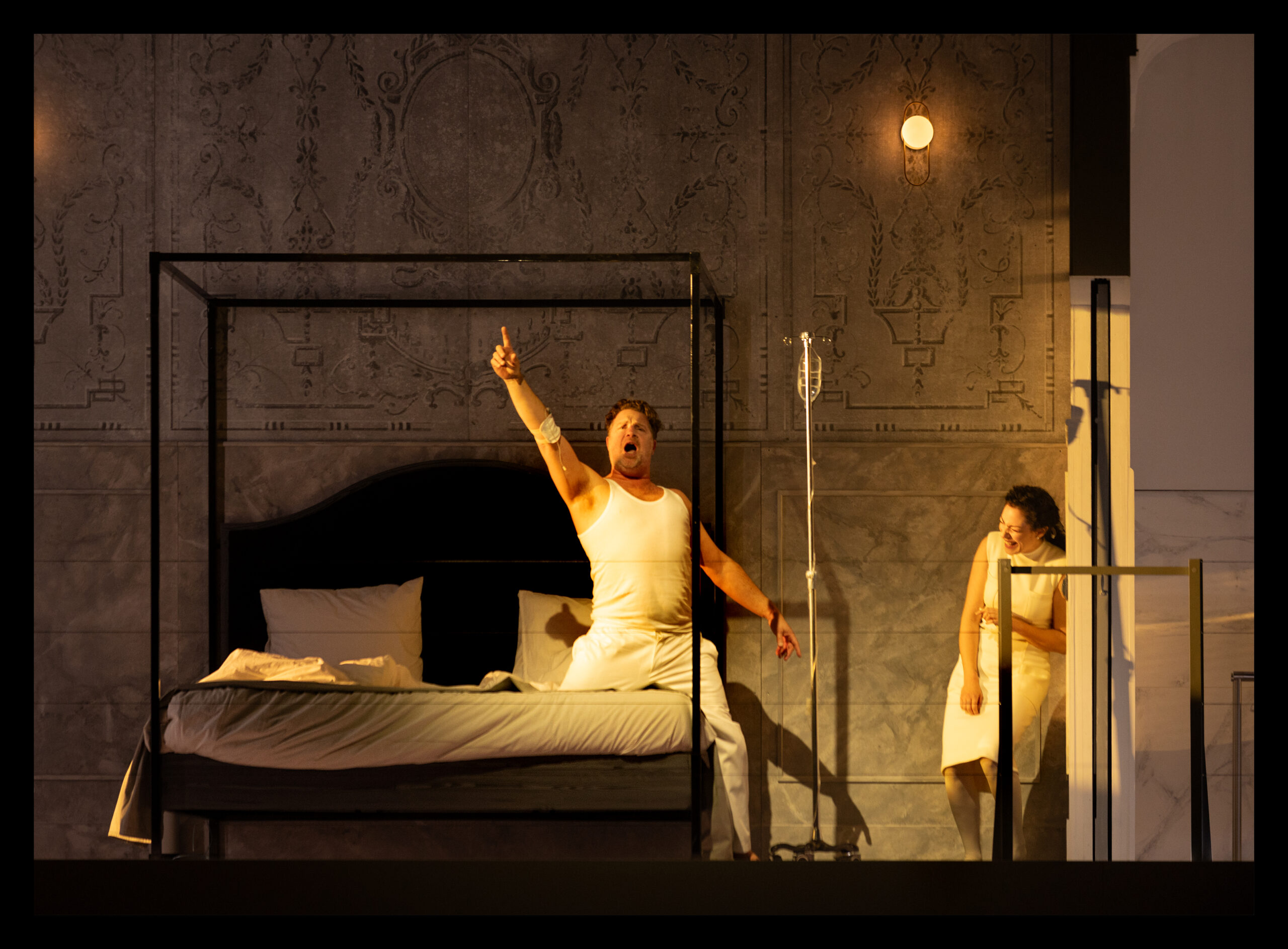
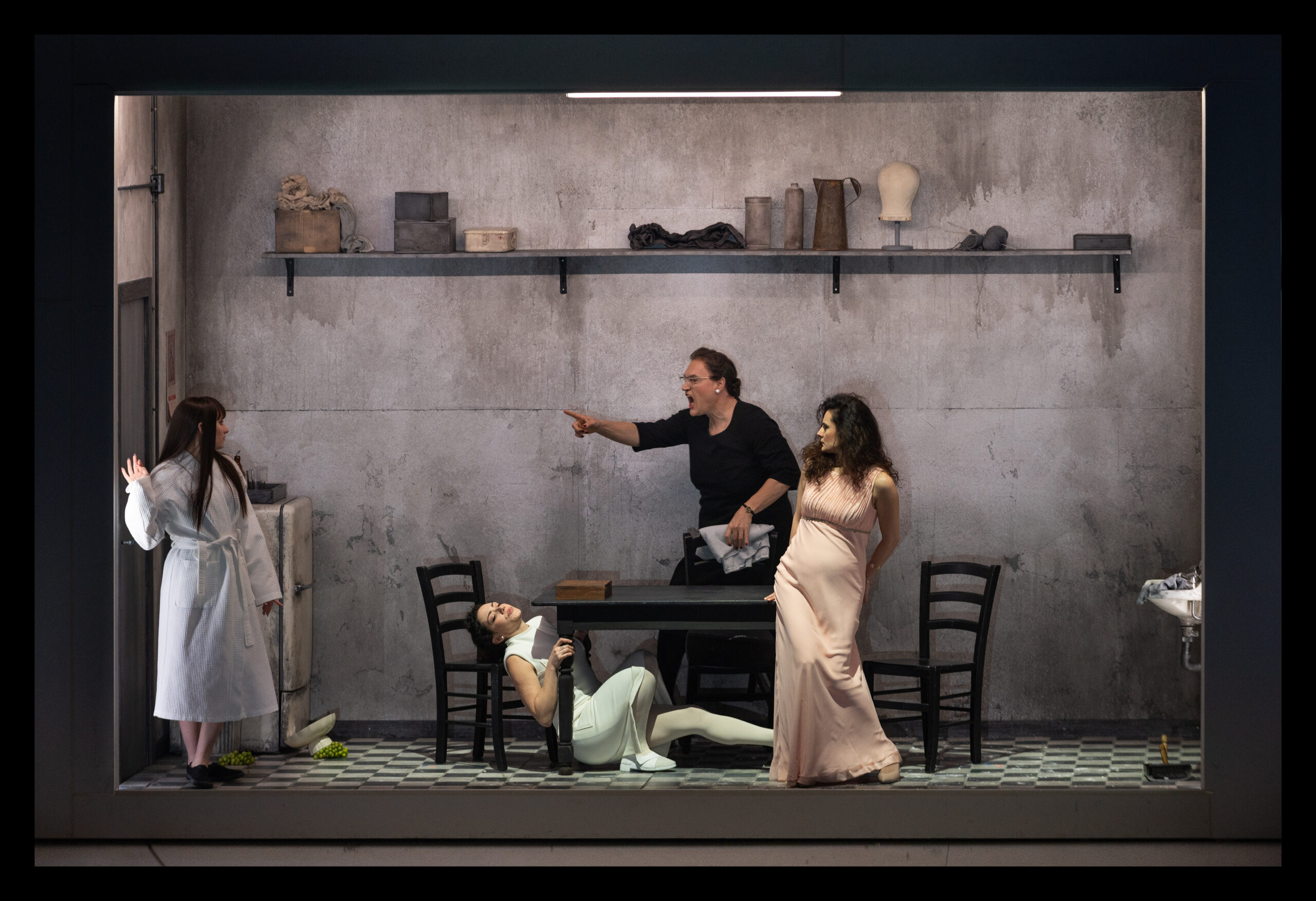
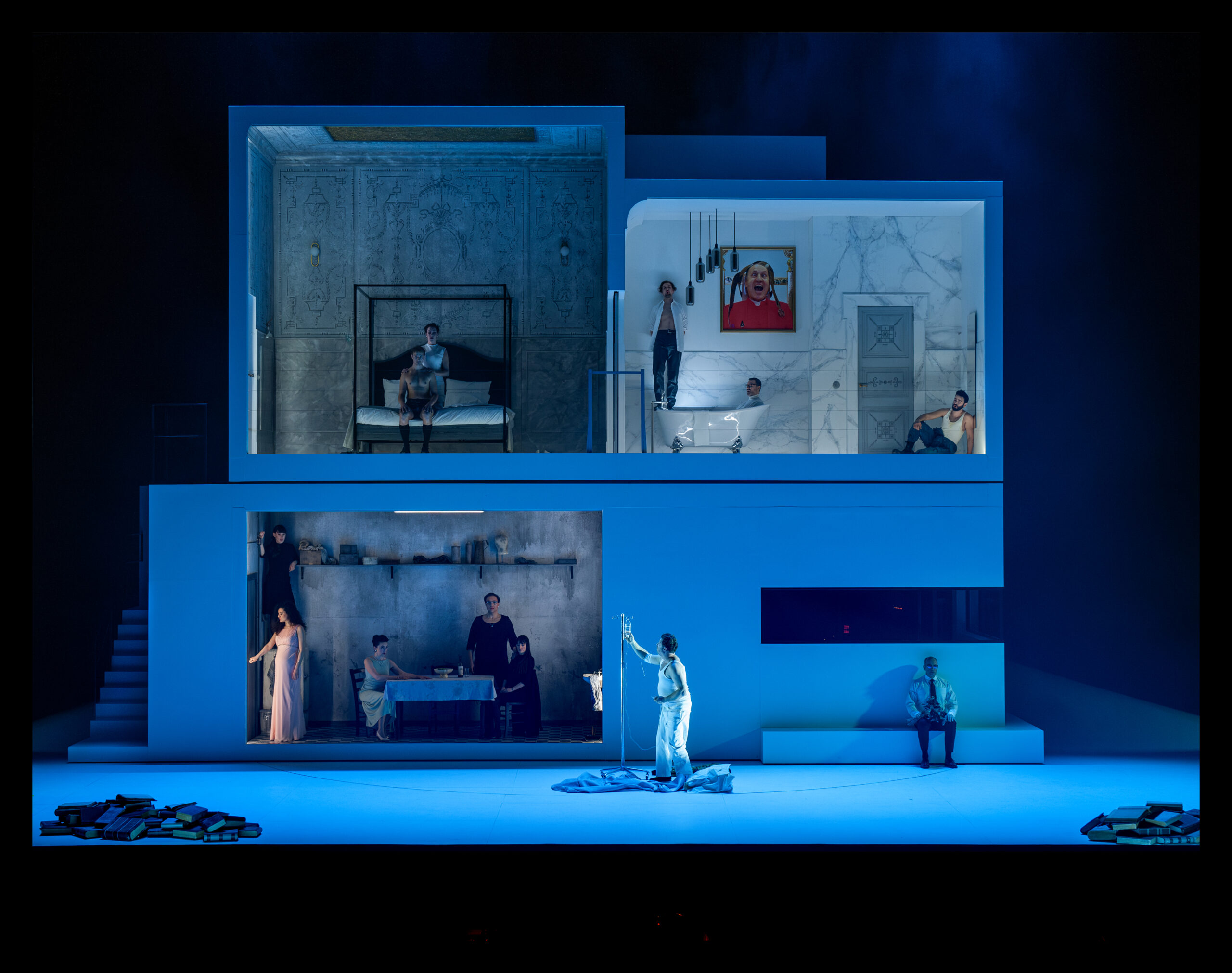
The staging too was excellent. The set, a bourgeois house with its two floors spinning independently to place the action in different rooms, was one of my favourite things about the production. The gaudy, nouveau-riche decor was present enough to get its point across, but not so overcrowded as to clutter the stage, and I just loved the concept of actually placing a house on stage to be able to tell the story they wanted to tell. That being said, the story itself wasn’t exactly told properly.
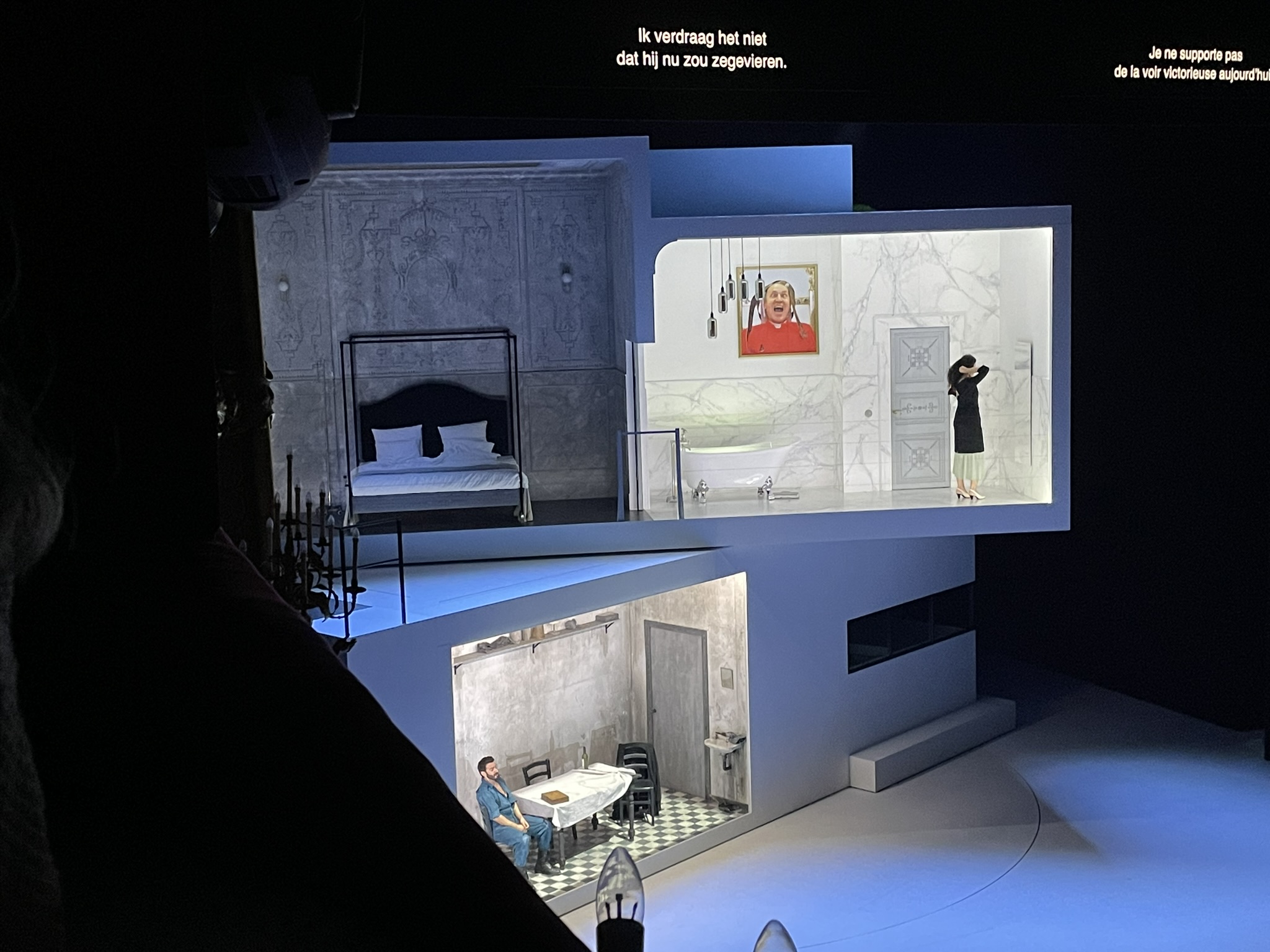
The conductor worked closely with the stage director, Rafael Villalobos, to choose and organise the music and develop the story for this two-day opera. He explained the concept in a musical lecture that can be found at La Monnaie website: “Inside the music – I Grotteschi“
Part I – Miro (I look)
Yes, there was a story in there – somewhere. The opera was set around a bourgeois family trapped together in confinement, a claustrophobic scenario as the underlying driving force of the drama. There were consistent characters, and there was a narrative thread tying it all together. The problem was that this thread was tangled and frayed beyond recognition.
Characters were constantly referred to by the wrong names (thanks to the borrowed material from the three Monteverdi operas), and the plot was bloated with so many subplots and side characters that following any single storyline became nearly impossible. It wasn’t that the story didn’t exist – it did – but the audience had to work far too hard to piece it together from the chaos onstage, and even reading the synopsis and going to the introductory lecture beforehand did very little to help. It felt like the production was hiding its own plot under layers of attempted cleverness and uncoherent information.
That’s what made this frustrating: the idea was sound, and there were flashes of genuine narrative interest, but they were drowned in unnecessary complexity, and an overabundance of characters and subplots. The story would have been better suited to a television series. Instead of pulling the three Monteverdi works into a clear new frame, the production let them blur together, leaving the viewer with constant uncertainty over who was who, what was happening, and why.
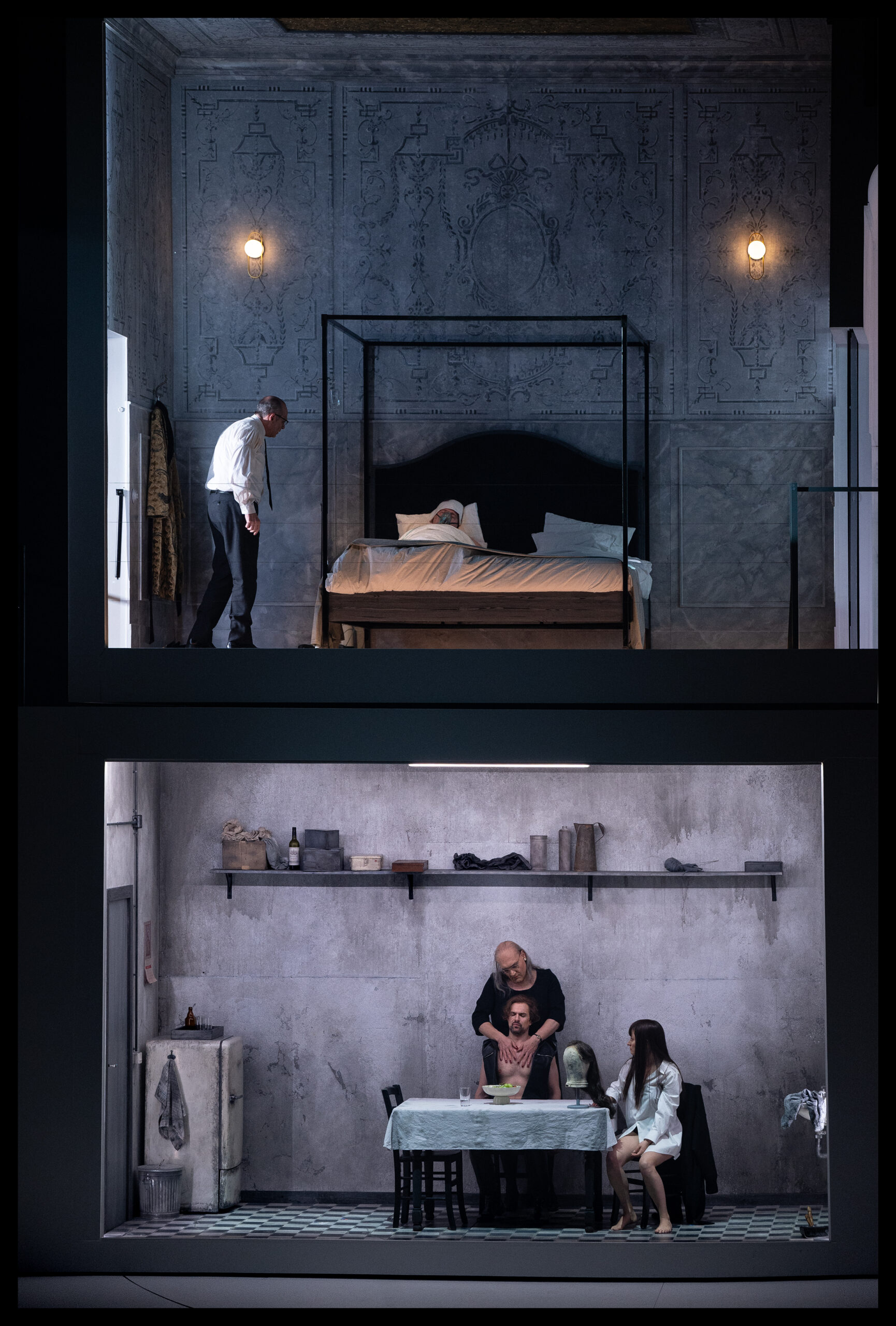
Part II – Godo (I enjoy)
Despite this, I didn’t hate the experience. Once I gave up trying to understand every moment, I found myself enjoying the strange, absurd energy of it all. But that doesn’t excuse the confusion. A production can be overly complex without being incomprehensible – take Wagner’s Ring – this one just didn’t strike that balance.
I took a video of the famous duet “Pur ti miro, pur ti godo“, which gives title to both operas and closes the story.
Originally from the opera L’incoronazione di Poppea, this beautiful song is supposed to be a love duet between Poppea and Nerone. But here it is sung by Virtù and Fortuna, representing a painful love triangle with Privileggio.
The two singers, Giulia Semenzato (soprano, Fortuna) and Raffaella Lupinacci (mezzosoprano, Virtù) were absolutely fantastic. The structure of the duet is A-B-A’, and the singers introduce some variations in the repetition. The beauty of both vocal lines, the sustained dissonances, and especially the way these two accomplished singers are able to convey emotions, have convincingly transformed a happy song into a sad lamento.
In the end, I Grotteschi was a visually rich and vocally excellent opera trapped in its own ambition. The story was there, but had so many unnecessary elements that most of the audience was left grasping for it.

Leave a Reply